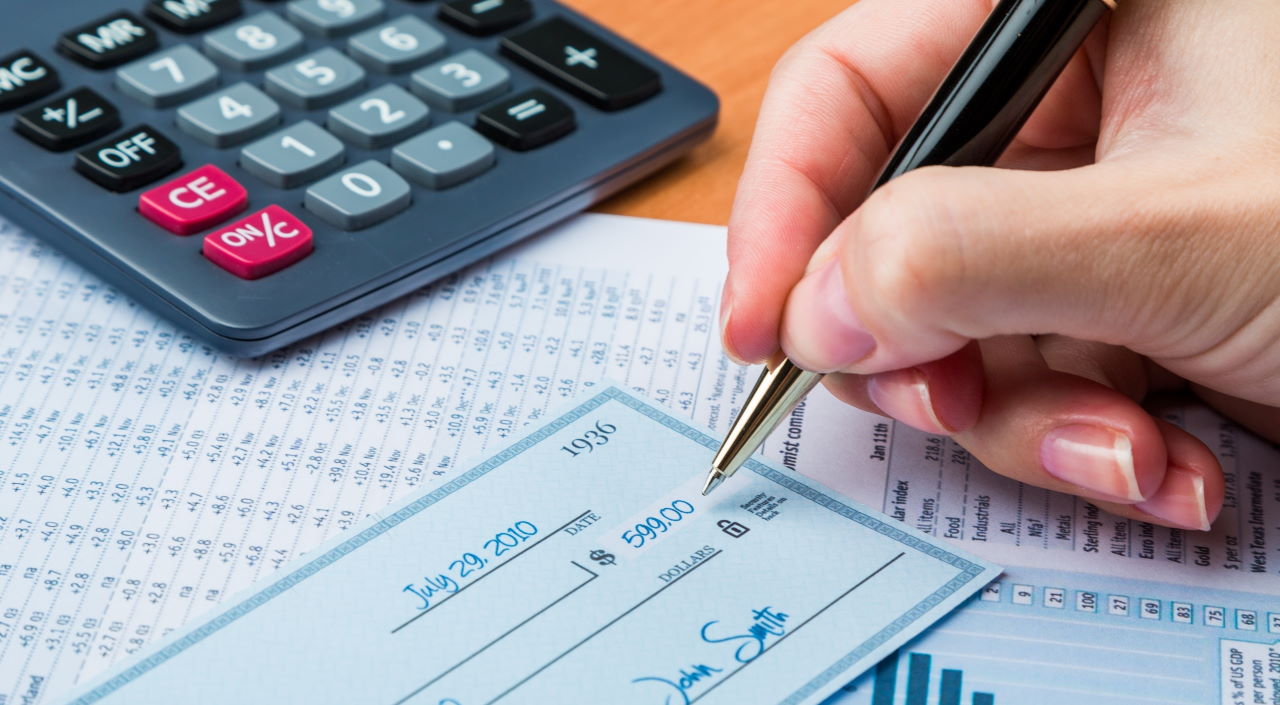
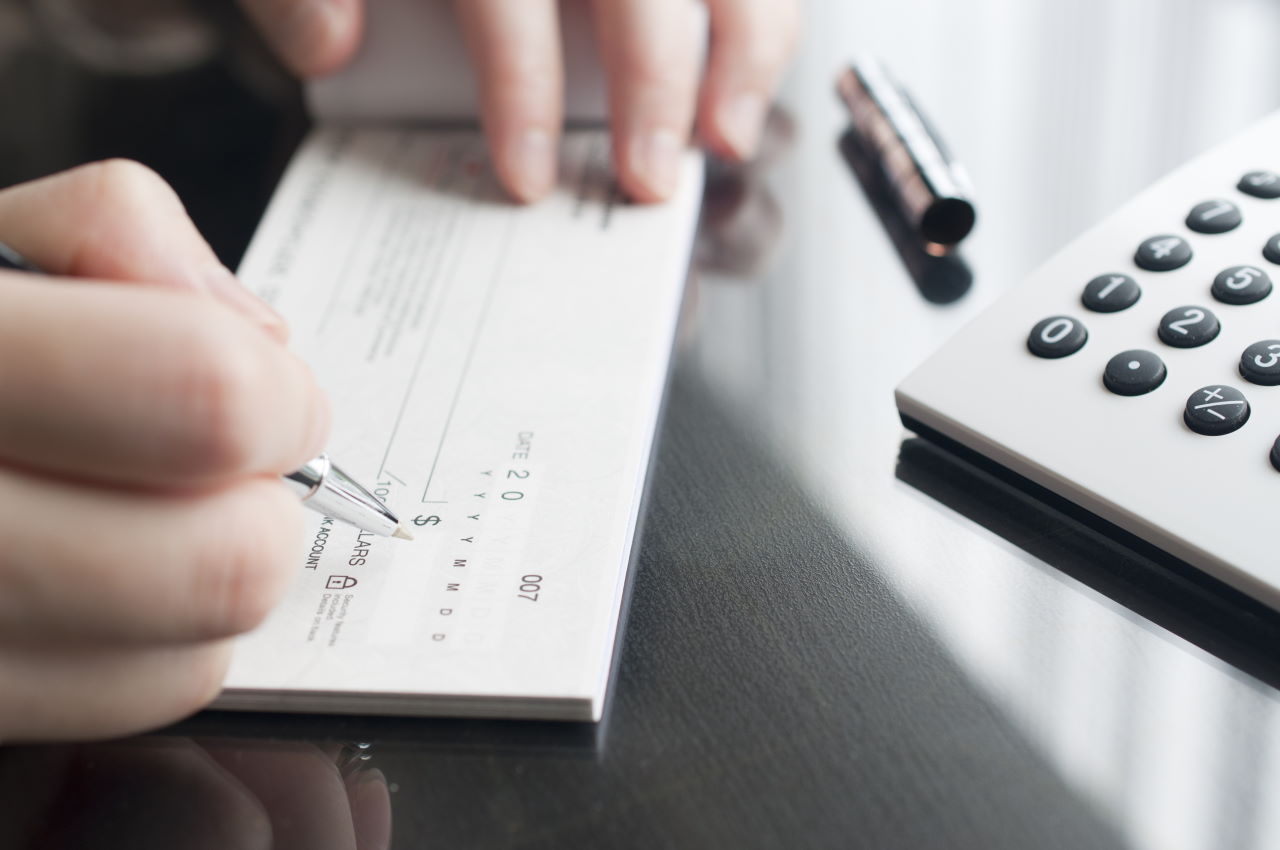
How to write a check, step by step
Checks feel old-fashioned until you need one — for rent, a contractor, a deposit, a gift. There are six things to fill in, and only one of them tends to trip people up.
- Date — write today’s date in the top-right corner. Postdating a check (writing a future date) doesn’t reliably stop it from being cashed early.
- Pay to the order of — the exact legal name of the person or business you’re paying. Skip nicknames and abbreviations.
- Amount in numbers — in the small box next to the $, written as digits, like 1,250.00. Include the cents.
- Amount in words — the long line beneath the payee. Spell out the dollars, then write the cents as a fraction over 100, like One thousand two hundred fifty and 00/100. This is the “legal amount,” and a bank honors it if it disagrees with the number box — so the two need to match. The tool above writes this line for you as you type.
- Memo — optional but useful: an invoice number, “August rent,” or your account number with a biller, so both sides know what the payment covers.
- Signature — sign in the bottom-right corner. An unsigned check is just a piece of paper.
The parts of a check
Above the fold you have your name and address (the payer), your bank’s name, and the check number — the same number that appears in the “No.” box and at the bottom. The payee line, dollar box, written-amount line, memo, and signature line make up the body.
The band of stylized digits across the bottom is the MICR line, printed in a magnetic font (E-13B) that banks scan automatically. It carries three numbers: your bank’s nine-digit routing number, your account number, and the check number. Routing numbers identify the financial institution; if you have one in hand and want to confirm which bank it belongs to, you can look it up here. For a deeper walkthrough, see how to write a check and how to write cents on a check.
When you still need a paper check
Even with instant transfers everywhere, a few situations still ask for paper: some landlords only take rent by check, certain deposits or fees must be paid by check or money order, and mailing a payment is sometimes the only option a biller offers. A check also leaves a clear paper trail, which can be handy.
When you have a choice, electronic options are usually safer and faster: ACH bank transfers, bill pay through your bank, or a money order for situations where you don’t want to share your account number. If you do print a check, use real check stock and magnetic MICR toner — a plain home printout is fine for your records or to fill in by hand, but it won’t reliably scan. And only ever print checks drawn on an account you’re authorized to use.
Related tools and guides
Need to bill someone instead of pay them? The invoice generator builds a clean, itemized invoice in your browser. To confirm the bank behind a routing number, use the routing number lookup. And for budgeting, loans, and savings math, browse the full set of free calculators. This page is for general information, not financial advice.
Frequently asked questions
Can I deposit a check I print here?
Only checks drawn on your own bank account, printed on real check stock with magnetic MICR toner. Banks read the bottom MICR line magnetically; a normal printer with standard toner usually will not clear reliably. This tool is for printing your own checks — never anyone else’s.
Why does it write the amount in words?
The “legal amount” (the words line) is what a bank honors if it disagrees with the number box. Getting it right matters, and it’s the part people most often fumble — so we write it for you as you type.
What is the MICR line at the bottom?
It encodes your bank’s routing number, your account number and the check number in the E-13B font banks scan. We render it for layout; printing a check that actually clears requires magnetic MICR toner and check stock.
Is my bank information stored anywhere?
No. Everything stays in your browser. Saved checks are kept locally on your device under your free account — your routing and account numbers never reach our servers.
What if I make a mistake while writing a check?
For a small slip you can neatly draw a single line through the error, write the correction above it and initial it — though many recipients prefer a clean check. If the check is badly marked up, it’s safest to write “VOID” across it in large letters and start a new one so it can’t be cashed.